
Work Permit for EU citizens
Citizens of the EU, the EEA (Iceland, Liechtenstein, Norway) and Switzerland may work in Germany without a work permit. Everyone else needs a residence permit that allows work, for example the EU Blue Card, a skilled-worker permit or the Opportunity Card for the job search; check the details with the Federal Foreign Office or Make it in Germany.
Exception:
EU citizens do not need a residence permit; register your address (Anmeldung) at the citizens' office within two weeks of moving in.
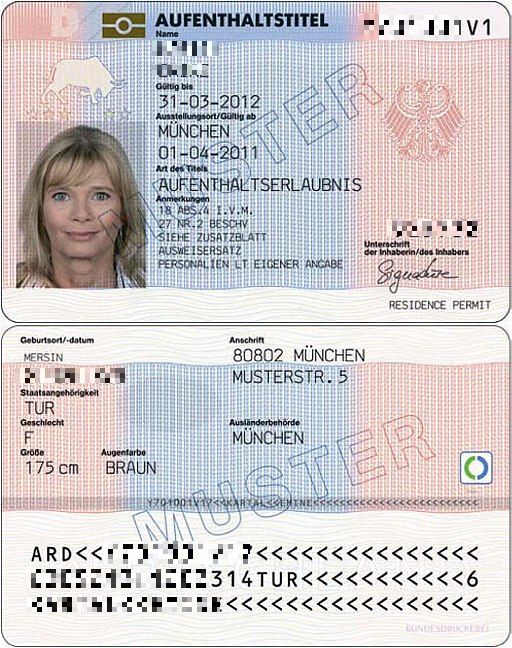
Work Permit for non-EU citizens
Foreigners who are not nationals of a Member State of the European Union (EU) or the European Economic Area or Switzerland should apply first for a residence permit. Working in Germany may only be exercised when your residence permit allows this. To check this on your own, please read your “residence permit” carefully and look for the following remark: “Erwerbstätigkeit gestattet”. If you don’t have this remark, you should visit the German Ausländerbehörde again and eventually apply again.
Normally before entering Germany, all nationals should first visit the German embassy in their country and get a German Visa (German: Visum).
Nationals of some countries, for example Australia, Israel, Japan, Canada, South Korea, New Zealand, the United Kingdom and the USA, can usually enter without a visa and apply for the permit in Germany; check the current list with the Federal Foreign Office – they can also get the necessary residence permit after entering Germany by visiting the immigration authorities in Germany (German: Ausländerbehörde).
Highly qualified specialists, for example in IT, often use the EU Blue Card; skilled workers with a recognised qualification can get a skilled-worker permit (Skilled Immigration Act).
If you need Health Insurance in the Embassy or Ausländerbehörde:
Before your job starts, for example for the visa appointment or a job-search period, the expat plan (Care Expatriate, HanseMerkur Versicherungsgruppe (Advigon Versicherung AG)) starts at €58 a month (Basic, ages 13–40, without the USA, Canada and Mexico); once a job with full social insurance starts, public insurance normally takes over: details here …
Useful Links
1. Arbeitsagentur Deutschland
http://www.arbeitsagentur.de
2. EURES – The European Job Mobility Portal
https://eures.europa.eu/jobseekers_en
3. Free Comparison of the main Private Health Insurances in Germany
Health Insurances in Germany
Which figures decide health insurance when you start work?
Regular earnings above €603 a month and up to €77,400 a year (€6,450 a month) normally make you a compulsory member of public health insurance from the first working day. The table shows the 2026 limits and what they mean.
| Item | Per month | Per year | What it means |
|---|---|---|---|
| Mini-job limit | €603 | €7,236 | Up to this amount a mini-job alone is free of compulsory health insurance for the employee |
| Compulsory insurance limit (Jahresarbeitsentgeltgrenze) | €6,450 | €77,400 | Above it employees are free of compulsory insurance and may choose private or voluntary public insurance |
| Opportunity Card proof of funds | €1,091 net | €13,092 | Job search from abroad, up to one year |
| Care Expatriate Basic, ages 13–40, without the USA, Canada and Mexico | from €58 | from €696 | Before the job starts, permanent residence outside Germany; Basic, ages 13–40, without the USA, Canada and Mexico |
Source: SGB IV § 8 and SGB V § 6 (1) no. 1 (read 23.11.2026); Deutsche Rentenversicherung (mini-job limit 2026); Make it in Germany (read 21.11.2026); the current tariff terms of the plan (read 23.11.2026).
Worked example: the health contribution on €3,000 a month
The general rate is 14.6 % plus the fund's additional rate, 2.9 % on average in 2026, shared equally between employee and employer. On €3,000 a month the total is 3,000 × 17.5 % = €525.00, so the employee pays 3,000 × 8.75 % = €262.50 and the employer the same. Your fund sets its own additional rate, and long-term care insurance is charged on top.
Who does this guide fit, and who does it not fit?
The guide fits non-EU citizens who need to know which permit allows work and when public insurance starts. It does not fit EU citizens, who need no permit, or people on special routes with their own pages.
| Your situation | Fits? | Where to go |
|---|---|---|
| EU, EEA or Swiss citizen | No | No work permit needed; register your address within two weeks of moving in. |
| Highly qualified specialist with a job offer | Yes | EU Blue Card guide: general threshold 50 % of the pension contribution ceiling (Section 18g (1) Residence Act), lower 45.3 % with consent in defined cases. |
| Job search from abroad | Yes | Opportunity Card guide |
| Young person from a working-holiday country | No | Working holiday guide |
| Self-employed or freelance | No | Freelancer visa guide |
Which insurance route fits which work situation?
Public health insurance normally applies from the first working day for regular earnings above €603 a month and up to €77,400 a year (SGB V § 186), while an expat plan fits the time before that job starts.
- Choose public insurance if you start a job with regular earnings above €603 a month and up to €77,400 a year (€6,450 a month): it normally starts on the first working day.
- Choose Care Expatriate (HanseMerkur Versicherungsgruppe (Advigon Versicherung AG)) if your permanent residence is outside Germany and you need cover before the job starts, for example for the visa appointment or a job search from abroad: from €58 a month (Basic, ages 13–40, without the USA, Canada and Mexico).
- Choose a visitor plan if the trip is short, up to 90 days: from €30 per 30 days (up to age 64, €25 deductible).
- Choose private or voluntary public insurance if your earnings are above €6,450 a month (€77,400 a year), because employees above this limit are free of compulsory insurance.
Our pick for job seekers and Opportunity Card holders with permanent residence outside Germany: Care Expatriate, because it covers a residence-permit period of up to 5 years from €58 a month (ages 13–40), and the plan terms, shown before you pay, explain the cancellation rules.
What are the limits and exclusions before you rely on a permit or a plan?
Work is allowed only when the residence permit says so, and Care Expatriate has set exclusions: it is not valid in the country of your nationality or the country where you lived before the trip. Both limits matter before relying on a permit or a plan.
- A permit without the remark "Erwerbstätigkeit gestattet" does not allow work; the immigration office (Ausländerbehörde) decides.
- Care Expatriate is not for people whose permanent residence is already in Germany; our contact form routes those readers to a fitting option.
- The territories of your nationality and your previous residence are excluded from the Care Expatriate cover.
- A mini-job alone up to €603 a month is not subject to compulsory health insurance for the employee, so the first working day does not start public cover in that case.
How long does it take from entry to the first working day, and when does insurance start?
Insurance for the visa or permit step can start before the trip, and public insurance normally starts on the first working day of a job above €603 a month.
- Before entering: visa at the German embassy for most nationalities; the expat plan documents usually arrive by e-mail within minutes after payment (the insurer runs a short plausibility check first), and the authority decides what it accepts.
- After entering: residence permit at the immigration office, with the remark "Erwerbstätigkeit gestattet" if work is allowed.
- Within two weeks of moving in: address registration (Anmeldung, Federal Registration Act § 17 (1)).
- First working day: public insurance normally starts (SGB V § 186); Care Expatriate has a minimum term of 3 months and a maximum of 5 years including extensions.
Which official sources does this guide rely on?
Permits for work are set in the Residence Act (AufenthG); the insurance duty follows the Fifth Book of the Social Code (SGB V). The immigration office decides which permit and which proof applies in your case.
Sources: Residence Act Section 18g (text of the law); Section 2 (3) (text of the law); SGB V § 186 (1) (text of the law); § 241 (text of the law); Federal Ministry of Health, contribution rates (all read 23.11.2026); Federal Registration Act (BMG) § 17 (1); Berlin service page 120686 (read 23.11.2026). For plans see Care Expatriate plan details, the online application and the expat insurance guide.
Other Interesting Topics for You:
Our Customer Testimonials

I am a long-term visitor in Germany and needed quickly a cheap insurance.
Got my insurance docs within minutes. Best Value for the money.THANKS!

We have received the documents REALLY within minutes and were able to extend our visa.
Great service. Can only recommend it.
Will use it definitely also in future.

Excellent experience. I have nothing but good things to say about this website and the online application service.
Their pricing is fair and reasonable.

Best Value for the money.
Got everything on time and did use the documents without problem to obtain a visa in the German embassy.We love you guys and are very appreciative of everything you do!
This might also interest you
Student Health Insurance in Germany: Cost and Comparison

Private Health Insurance for Foreign Students in Germany over 30 years

Visa, Residence Permit, and Health Insurance for Job seekers in Germany from Countries Outside the EU
Medical Health Insurance for Foreign Students in Germany and Austria – from €27.50 a month (Basic, up to age 29, first 24 months; up to 5 years)

Public Health Insurance for Students in Germany Comparison, Changing and Cheapest Insurance Premiums
Frequently asked questions
Do I need a work permit as an EU citizen?
No. Citizens of the EU, the EEA (Iceland, Liechtenstein, Norway) and Switzerland may work in Germany without a work permit and do not need a residence permit. You do need to register your address (Anmeldung) at the citizens' office within two weeks of moving in.
How do I know my residence permit allows me to work?
Read your residence permit carefully and look for the remark "Erwerbstätigkeit gestattet". If it is there, you may work; if it is missing or restricted, ask the immigration office (Ausländerbehörde) before you start. Working is only allowed when your permit allows it.
Which permits let non-EU citizens work in Germany?
Highly qualified specialists, for example in IT, can apply for the EU Blue Card; skilled workers with a recognised qualification can get a skilled-worker permit. The Opportunity Card is for the job search. Check the details with the Federal Foreign Office or Make it in Germany.
Do I need a visa before I enter Germany?
Normally yes: visit the German embassy in your country first and get a visa. Nationals of some countries, for example Australia, Israel, Japan, Canada, South Korea, New Zealand, the United Kingdom and the USA, can usually enter without a visa and apply for the permit in Germany. Check the current list.
Do I need health insurance for my work or residence permit?
For a residence permit the immigration office checks that you have adequate health insurance, and the authority decides what it accepts. Visitor plans start at €30 per 30 days (stays up to 90 days, €25 deductible, up to age 64); for longer stays see the expat plan, from €58 a month (Basic, ages 13–40, without the USA, Canada and Mexico).
Will I be in public health insurance once I start working?
If your regular earnings are above €603 a month and up to €77,400 a year (2026 threshold), you normally become a compulsory member of a public health insurance fund from your first working day. A mini-job up to €603 a month is free of compulsory health insurance for the employee.